The Collections
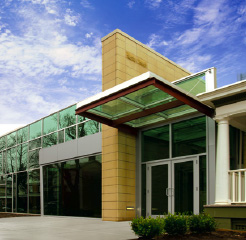
The Maridon Museum opened to the public on May 8th, 2004. It is the only museum in the Western Pennsylvania region with a specific focus on Chinese and Japanese art and culture. The museum, both the objects and the buildings that house them, are the gifts of Mary Hulton Phillips. Mrs. Phillips was a lifelong resident of Butler, PA, and the museum is her legacy to this small town. Patricia Lowry, writing in the Pittsburgh Post-Gazette, pronounced the Maridon a “gleaming little gem of a museum.”
 The Maridon’s permanent collection includes over 800 art objects. The Asian art collection includes jade and ivory sculptures, tapestries, landscape paintings, scrolls, and artifacts. The collection contains objects that date back to the Neolithic Period (2nd and 3rd millennium B.C.), as well as a set of six 6 ft. by 8 ft. ink-on-paper scrolls by the contemporary Chinese artist, Wan Qingli, which was painted in 2002.
Three hundred pieces of Meissen porcelain are also included in the museum’s collection. Many works date back to the early 18th century, and one exceptional piece comes from the personal collection of the Augustus the Strong, Elector of Saxony from 1694-1733, and the “founding father” of Meissen porcelain.
The opening exhibition of objects is entitled A Collector’s Journey and presents selections from Mrs. Phillips’ holdings that reflect the scope and evolution of her interests as a collector. The exhibition will be on view in the four galleries of the main building.
Frequently Asked Questions
Answers to common questions about the art collections at The Maridon Museum in Butler, PA.
What is in The Maridon Museum’s collection?
The Maridon’s permanent collection includes more than 800 art objects. The Asian art collection focuses on Chinese and Japanese art and includes jade and ivory sculptures, tapestries, landscape paintings, scrolls, and artifacts. The museum also holds 300 pieces of German Meissen porcelain.
How old are the oldest objects in the collection?
Some objects in The Maridon’s collection date back to the Neolithic Period (2nd and 3rd millennium B.C.). The collection also includes contemporary work, such as a set of scrolls painted in 2002 by Chinese artist Wan Qingli.
Who assembled The Maridon Museum’s collection?
The collection was assembled by Mary Hulton Phillips, a lifelong resident of Butler, PA. Both the objects and the buildings that house them were her gifts, and the museum is her legacy to the Butler community. The Maridon opened to the public on May 8, 2004.
How many galleries does The Maridon Museum have?
What can I see in the Front Gallery?
The Front Gallery introduces the Asian art collection. Its center platform holds ornate jade and ivory sculptures, some as large as 4 feet tall. On one wall hangs a mid-seventeenth-century Chinese landscape painting on silk, and on the opposite wall is a set of six large scrolls by contemporary Chinese artist Wan Qingli.
What are the Wan Qingli scrolls at The Maridon?
The Maridon owns a set of six ink-on-paper scrolls, each 6 feet by 8 feet, painted in 2002 by contemporary Chinese artist Wan Qingli. They are displayed in the Front Gallery.
What is in the Side and Rear Galleries?
The Side and Rear Galleries present objects that Mrs. Phillips valued for their uniqueness, age, material, or provenance. Many reflect her interest in the human figure, including portrayals of ordinary people and daily life as well as emperors and legendary figures.
What is the Chinese scholar exhibit?
The Rear Gallery features an exhibit on the world of the Chinese scholar, or mandarin, who pursued refinement in painting, calligraphy, and poetry. The display includes scrolls and a scholar’s table set with ancient decorated ink blocks, ink stones, scroll boxes, brush pots, a flywhisk, a contemplative rock, and a scholar’s chair.
What is Meissen porcelain?
Meissen was the first porcelain produced in the Western world. Production began in Germany in 1710 under Augustus the Strong, Elector of Saxony, and continues today. In the eighteenth century, Meissen became known for detailed, brilliantly colored figural pieces in the baroque and rococo styles.
How much Meissen porcelain does The Maridon have?
The Maridon’s collection includes 300 pieces of Meissen porcelain, displayed in the Meissen Gallery. About one hundred figural pieces are featured, including characters from Italian comedy, allegorical scenes, art nouveau pieces, and comical vignettes of eighteenth-century society.
What are the most notable Meissen pieces at The Maridon?
Highlights include a piece from the personal collection of Augustus the Strong, considered the founding father of Meissen porcelain, and a piece that predates the Meissen factory itself. The gallery also displays two examples of the famous Swan Service, a dinner service created in 1736 that included more than 2,000 pieces.
What is the Meissen Monkey Band?
The Monkey Band is a mid-eighteenth-century satirical set of Meissen figures. The Maridon displays thirteen pieces from it. Mrs. Phillips’ collection includes nearly all the objects in several Meissen groupings, including The Monkey Band, The Paris Criers, The Arts, The Senses, and The Satyrs.
Do I need to know about porcelain to enjoy the Meissen Gallery?
No. Collectors will appreciate the depth of the collection, but any visitor can enjoy the artistry, color, and humor of the pieces, which portray notable and ordinary people, animals, caricatures, and dramatic scenes.
Are guided tours of the collections available?
Yes. Free docent tours are available. Reservations are required for group tours and suggested for docent tours and the video presentation. Call 724.282.0123 to reserve.
Can I view The Maridon’s collection online?
Yes. The museum’s
3D virtual tour lets you explore the galleries online before you visit.
 Virtual Tour
 Donate
 Search